
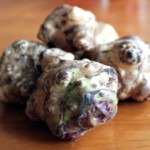
There’s only 2 more weeks left of this 52 week challenge (more on that later this week) and I’m running out of steam. A couple of days ago I realized I had nothing planned for this week – nothing written, nothing photographed, not even an ingredient chosen, much less purchased. I wandered through my local food co-op, since they usually having something unusual around, and came across these funny looking hairy roots in the produce section:
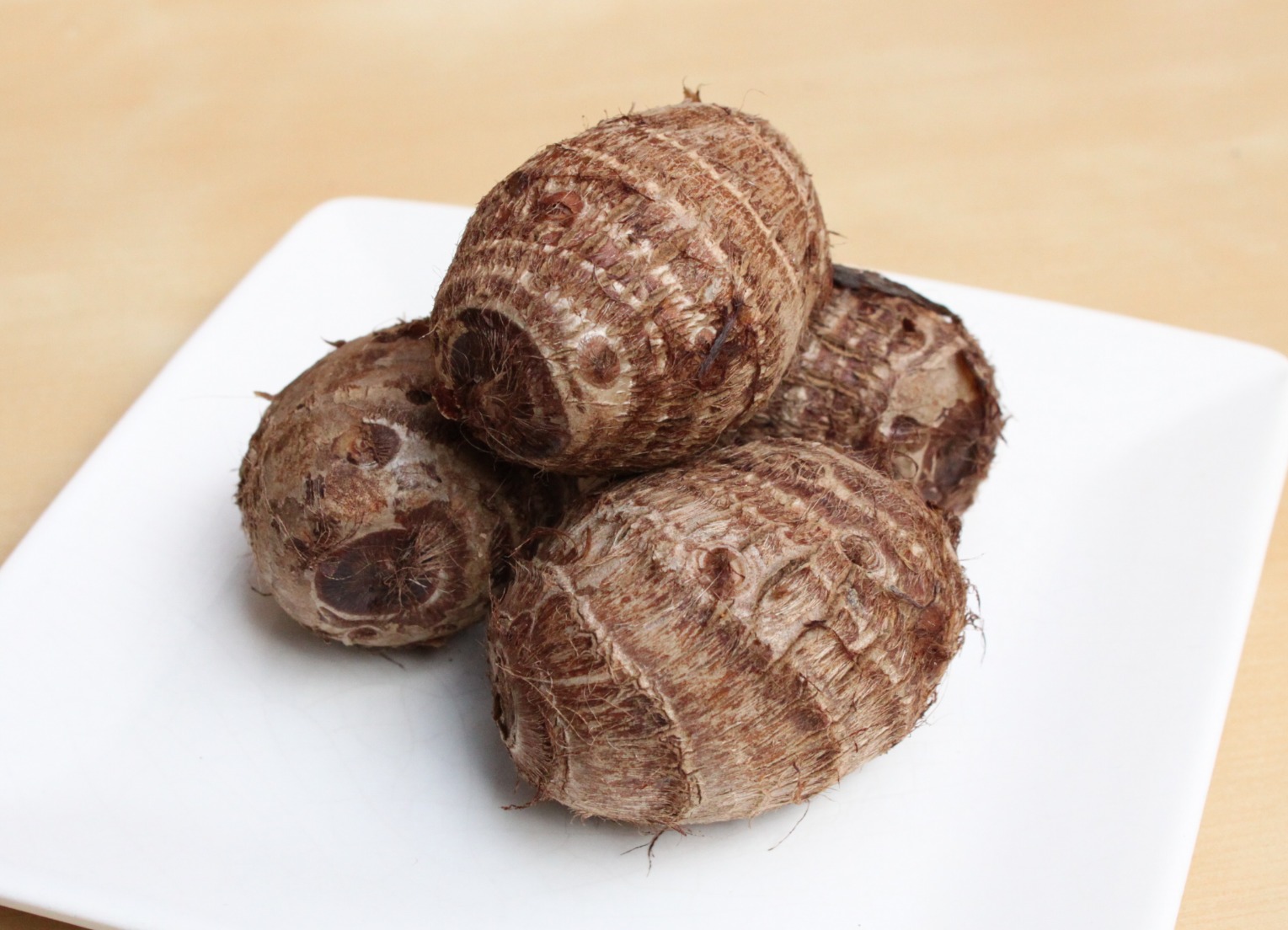
They are taro roots, a staple in Asian and African cultures. These root vegetables are native to southeast Asia and considered to be one of the first cultivated plants. Both the root and the large leafy greens it produces can be eaten. The root can be used in place of potatoes in most dishes and have a slightly nuttier flavor. They are high in fiber, vitamins C, E and B6, as well as copper, potassium and manganese.
The plant is considered toxic when raw, but cooking minimizes the toxin, especially with a pinch of baking soda or by steeping the roots in cold water overnight. It is also recommended to drink milk or consume other calcium rich foods with taro to reduce the effects of the toxins, which contribute to kidney stones, gout or rheumatoid arthritis.
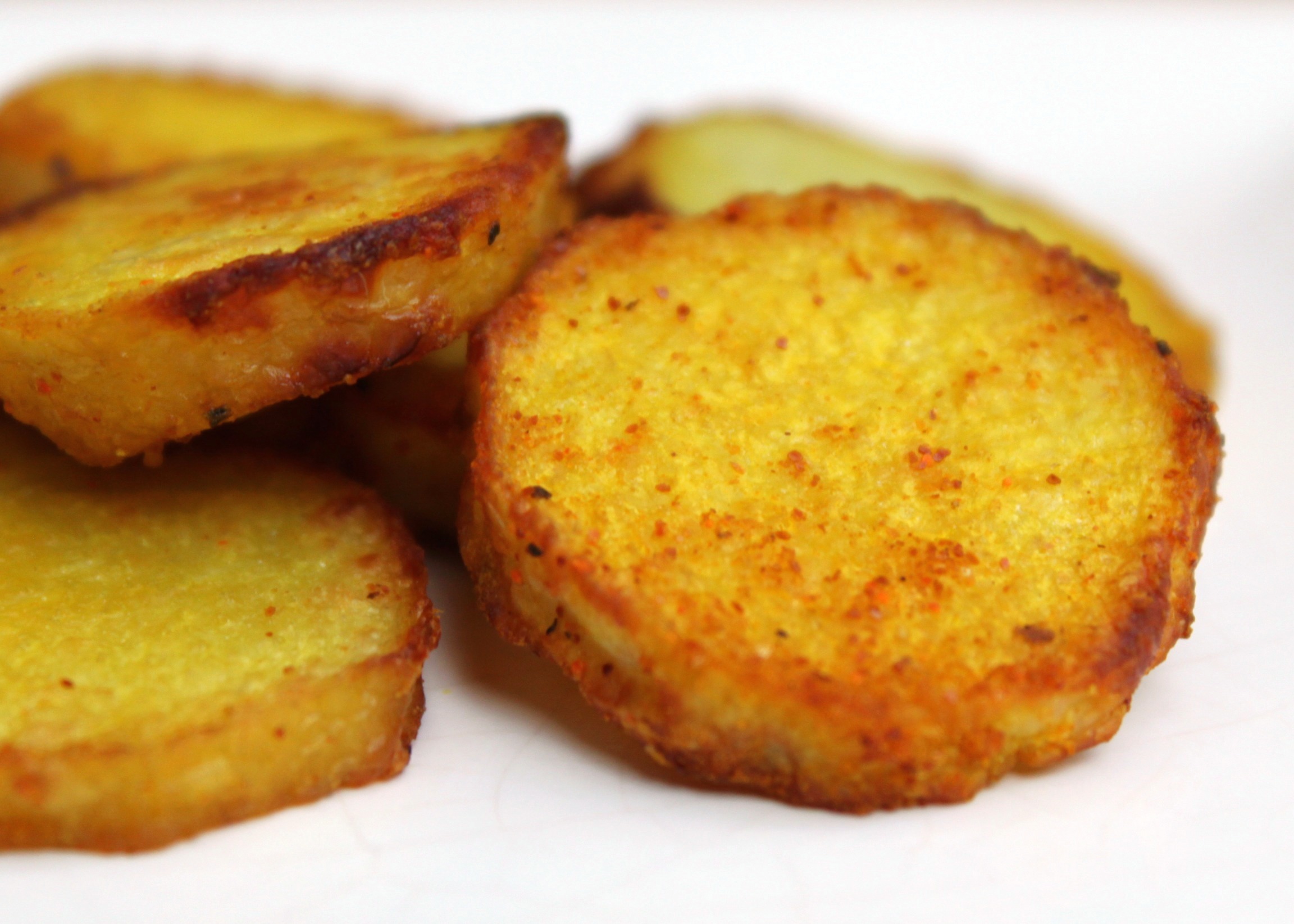
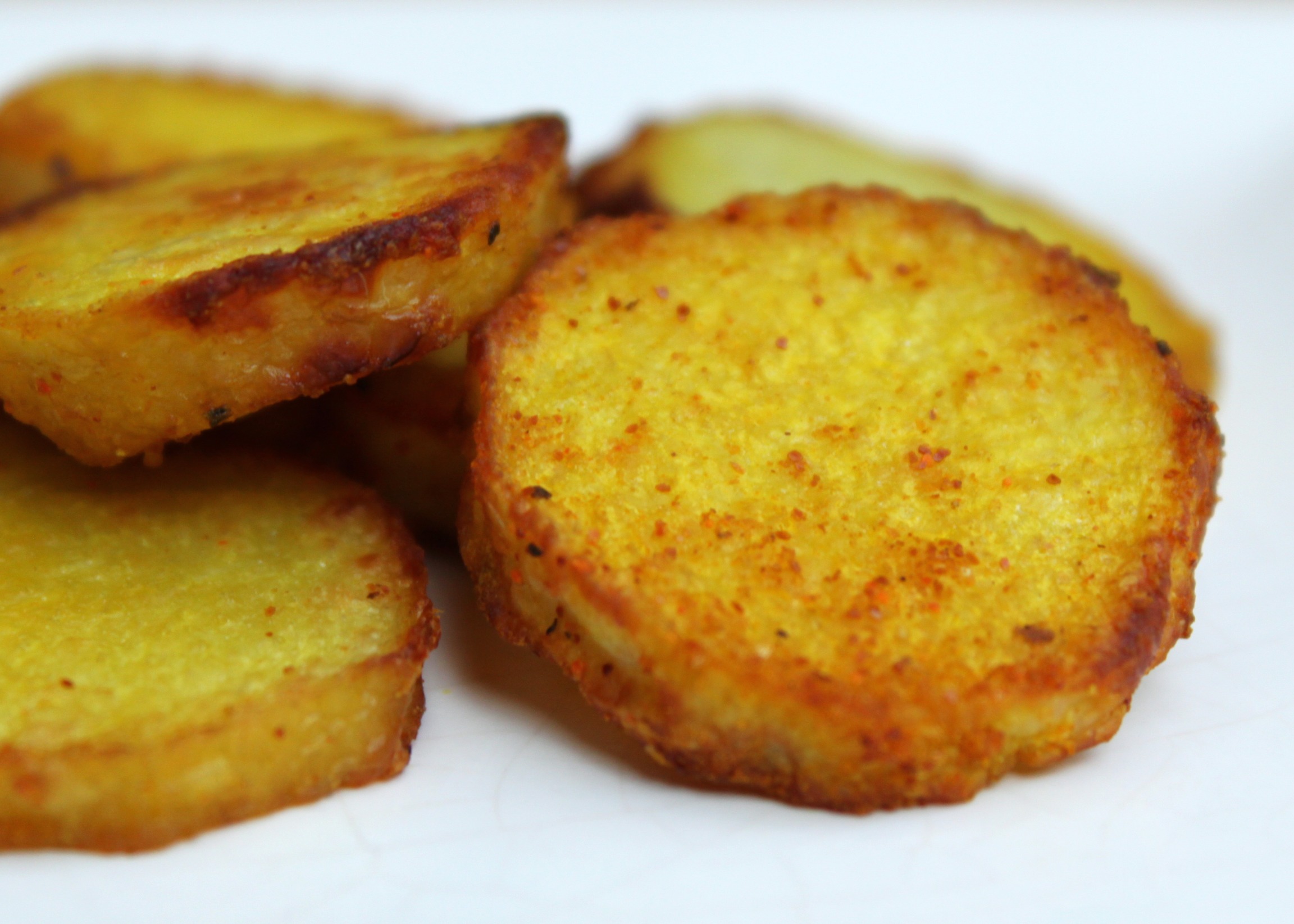
I didn’t know all that scary toxic stuff until after I had already bought, cooked and eaten some of the taro. I’m not too worried though, because as you’ll see below, the root is boiled, baked and broiled, so I think it is fine. Making baked taro chips is pretty easy and you can flavor them however you like (salty, spicy, etc.) by adding any spices you’d like.
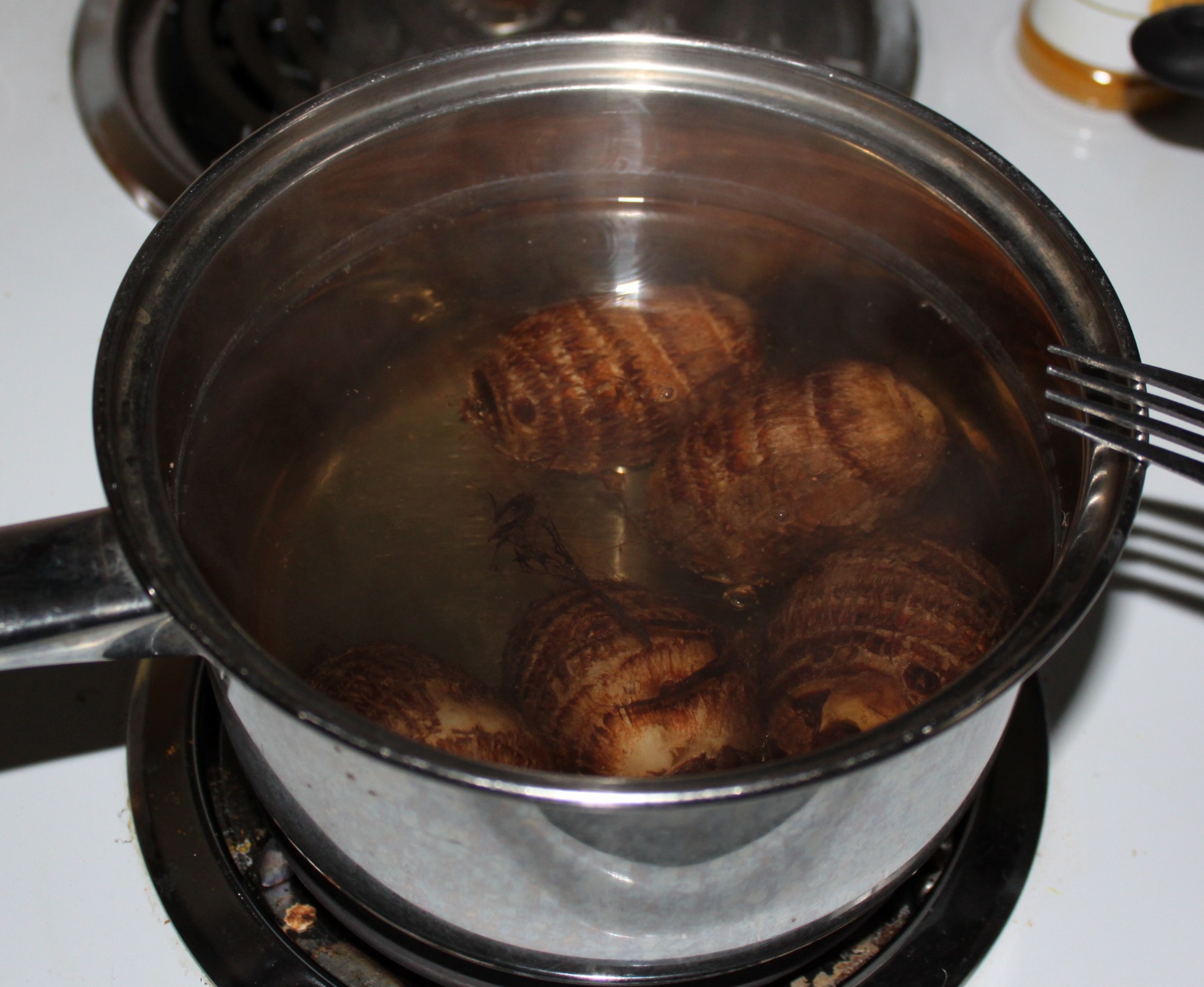
Step 1: cook taro root in boiling water until soft (10-20 minutes). Be careful not to overcook, as this makes taro root mushy. Cook until just barely fork soft.
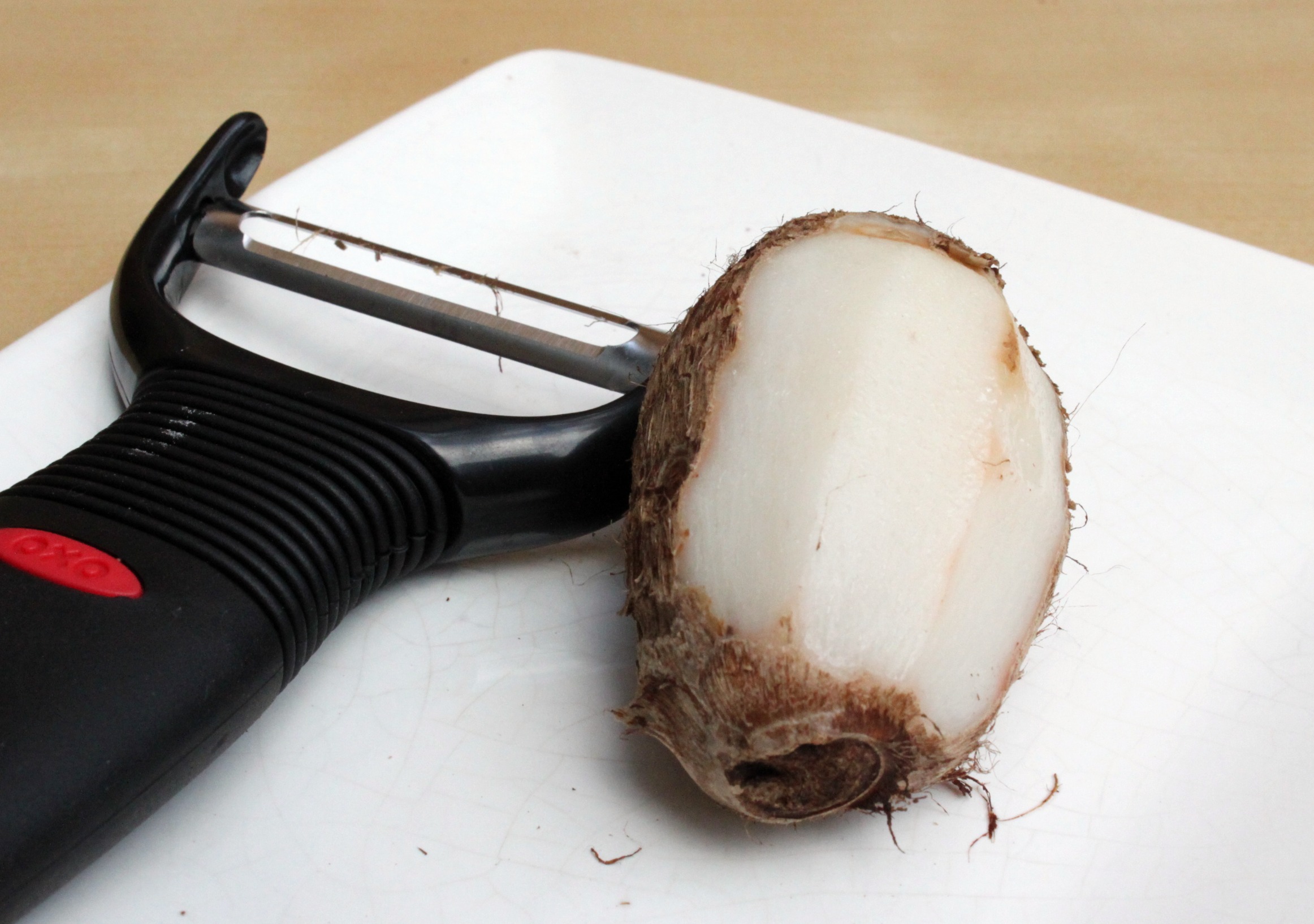
Step 2: remove taro from water and let cool until you can comfortably handle it. Peel skin (be careful, as the flesh is somewhat slimy and sticky, making it hard to grip).
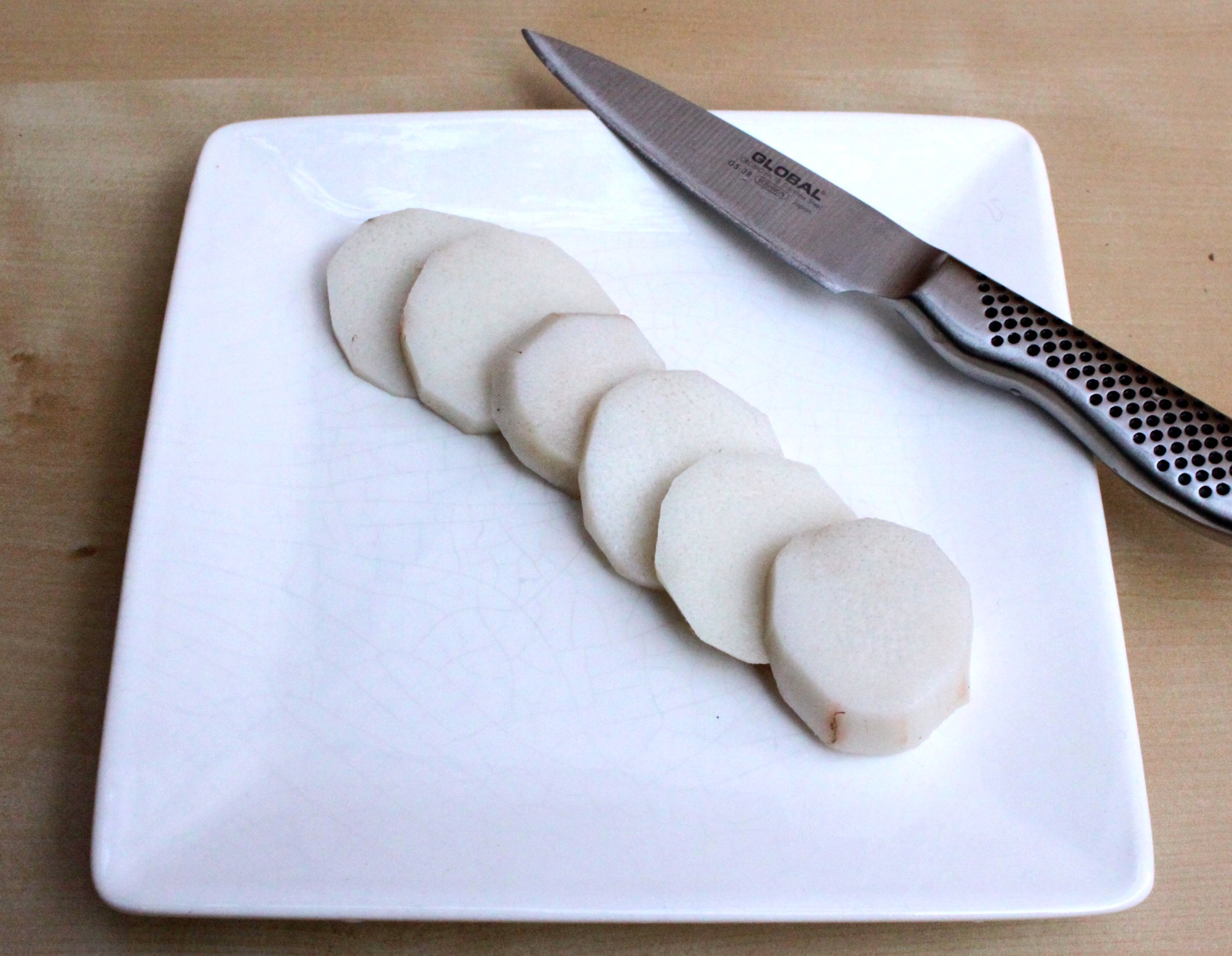
Step 3: evenly slice peeled taro root in 1/4-1/2 inch slices.
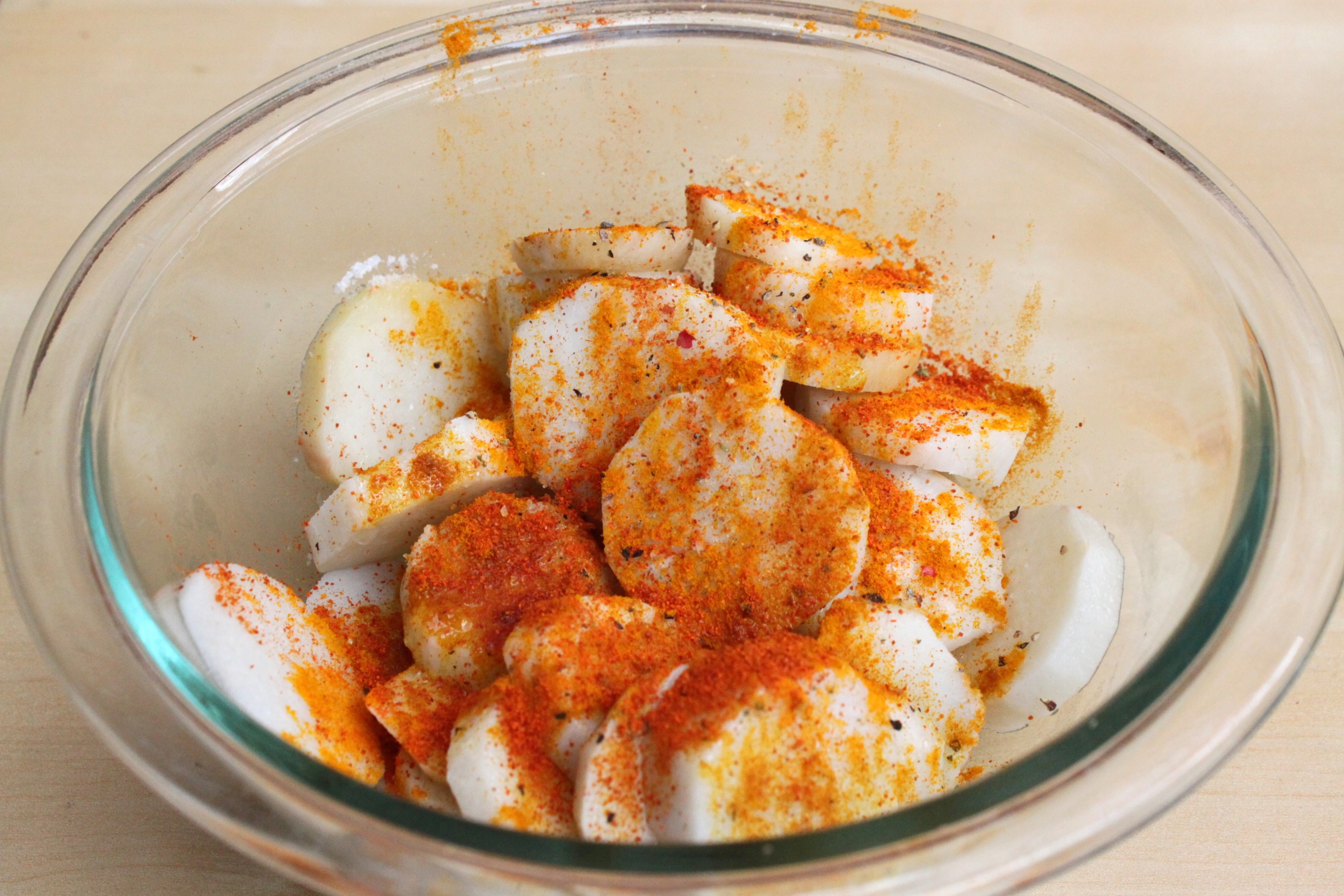
Step 4: season taro root slices with salt, pepper and your favorite spices (I used tumeric and cayenne pepper).
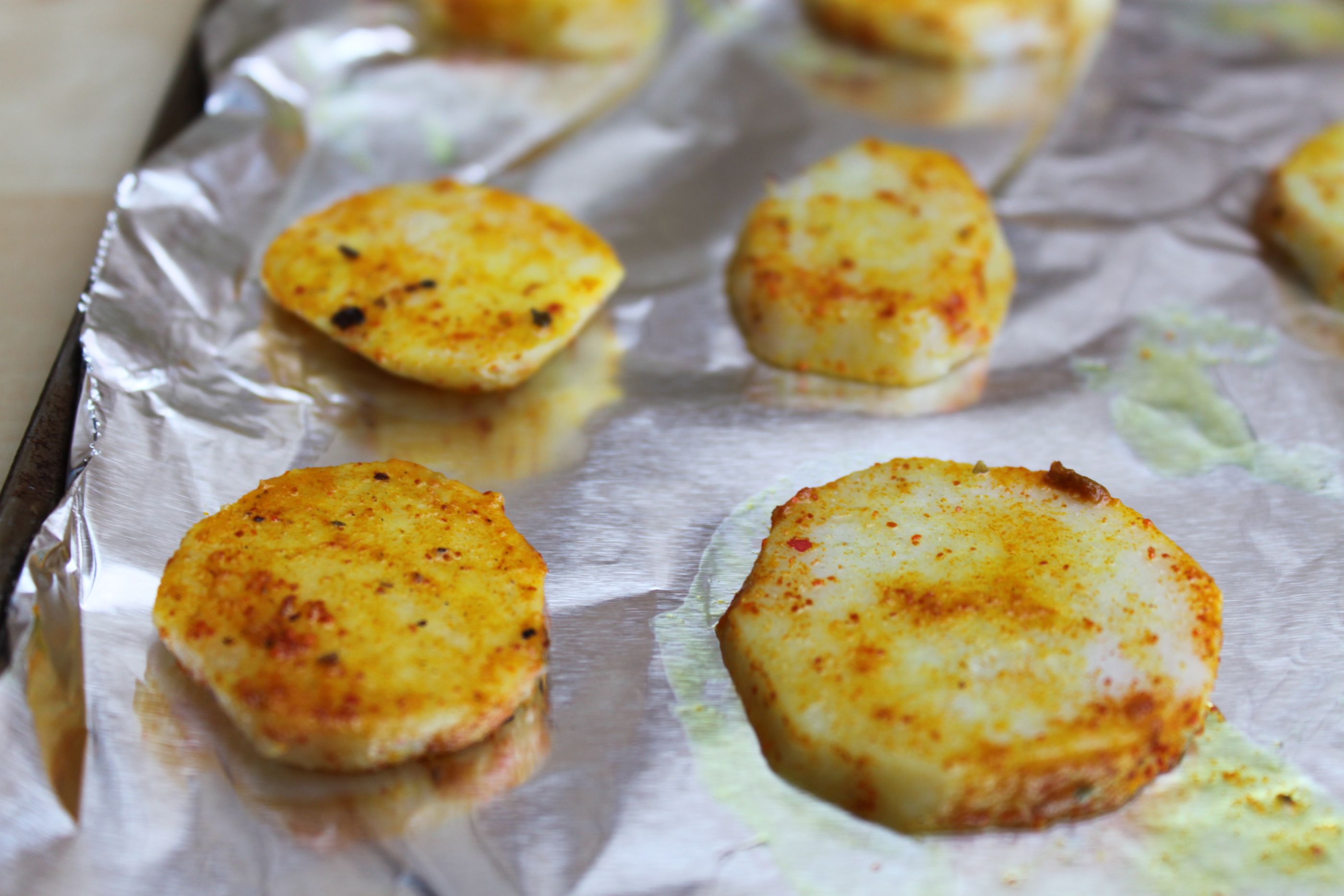
Step 5: arrange slices on a baking sheet covered with foil. Bake for 10 minutes at 350ºF, then broil for 6 minutes, turning pieces halfway through. They should be lightly golden brown.
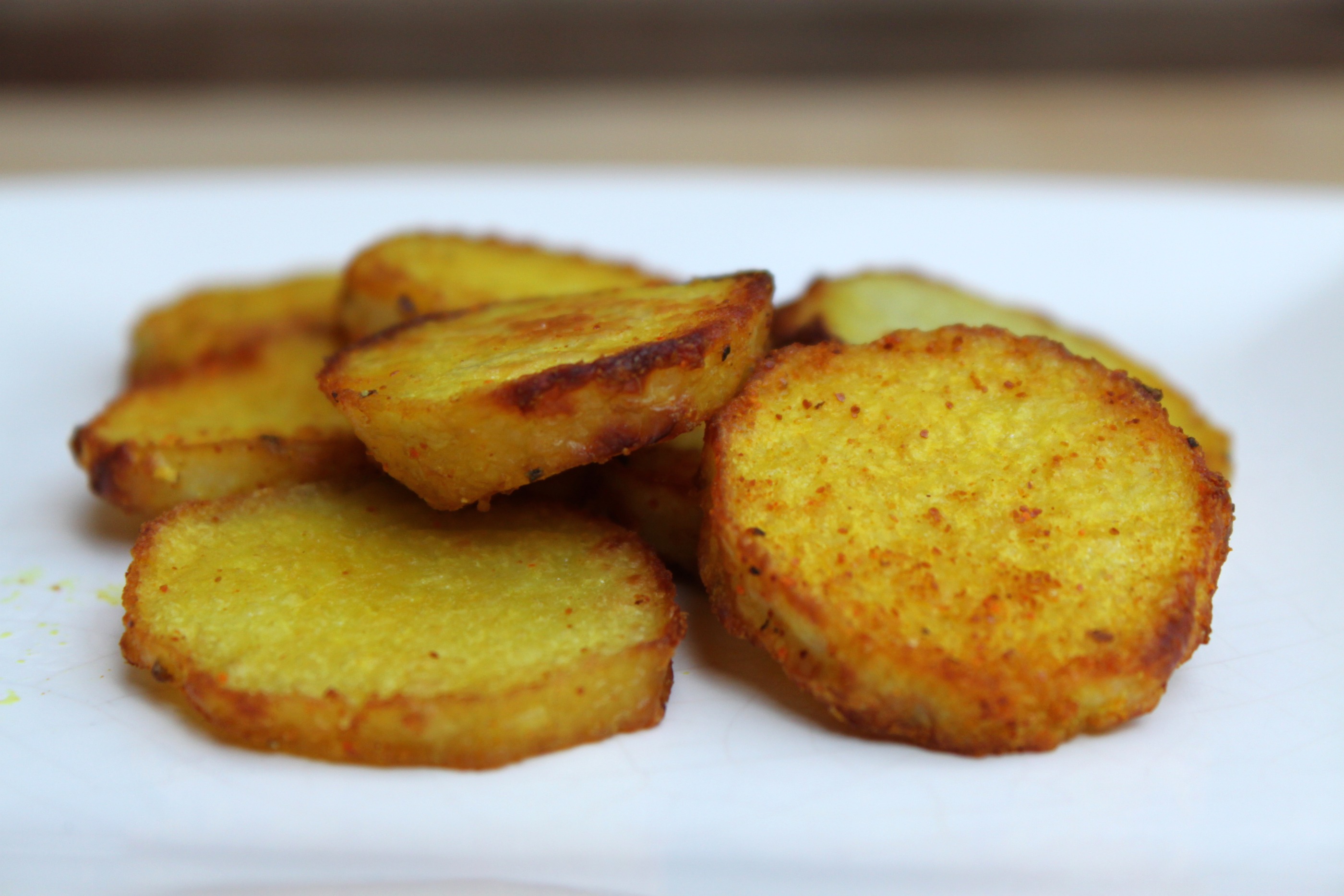
Step 6: Enjoy!


10 Comments on Week 50: Taro Root
1Pingbacks & Trackbacks on Week 50: Taro Root
-
[…] Bun: This had sweetened, mashed taro root woven throughout, and I liked it. I liked it a […]
Paolo
December 13, 2010 at 8:20 am (13 years ago)Interesting to know about taro’s toxicity – I love it but I’d probably better limit my intake 🙂 (though I’m confident that the Chinese cooks in Vancouver know how to prepare it). I’m really curious about your chips, flavor and texture, I’m definitely going to try making them.
torviewtoronto
December 13, 2010 at 6:12 pm (13 years ago)thank you for sharing this information
lovely pictures
happy holidays
Jessi
December 13, 2010 at 10:38 pm (13 years ago)I was just wondering around the Richmond District in SF yesterday and found these amazing Asian markets around Clement and 6th. You should check it out, they had all sorts of jelly fish and seaweed and things I wasn’t even sure what they were. It was all really exciting and different. Help you go out with a BANG!
Dimah
December 13, 2010 at 11:59 pm (13 years ago)That looks delicious. yummy
Congrats on the top 9!
Jenny @ meltingbutter
December 14, 2010 at 1:02 am (13 years ago)I’ve only every had taro in asian cuisine…this looks very interesting… thank you for sharing 🙂
sensiblecooking
December 14, 2010 at 10:48 am (13 years ago)I got some taro roots this weekend. I usually use it for thickening lentil soups. it gives lovely creamy texture to soup. But never made chips.I will have to try your recipe, my other half will love it.
Joy
December 14, 2010 at 12:31 pm (13 years ago)I love taro but I hardly get a chance to cook with them. I love the recipe.
Adi Venkata
March 2, 2013 at 8:27 am (11 years ago)Taro Roots is quite a popular dish in India – esp. South India. My favorite way is to Taro Root fry (after boil) eaten with rice … Simply delicious
Thanks for helping with a easy way of making it …
Rose Graham
November 16, 2014 at 12:59 pm (9 years ago)I’ve been eating grilled taro with only salt and pepper, but the tumeric and cayenne pepper added a spicy flavor, (plus they are good for us!)